← The culture, on the web Download PDF

How
We
Build

Software, businesses,
and each other.

Six values, and what each one does not mean.
Four rules for building with AI.
The work we say no to.
And the ₹8,000 we started this company with.
Raipur  ·  Since 2017
C
We started CodeNicely as we learned to CodeNicely.
The name. And the whole idea.
  • One — Who we are
  • 1This is not a constitution5
  • 2How we started7
  • 3Why Raipur12
  • 4Why we exist14
  • 5What we're aiming at16
  • 6Built entirely on word of mouth17
  • Two — What we believe
  • 7The six21
  • 8Own the outcome22
  • 9CodeNicely26
  • 10Be open30
  • 11Be kind — and fun to be with34
  • 12Their business is our business38
  • 13Stay curious42
  • 14Where these came from46
  • Three — How we work
  • 15The rhythm49
  • 16We run on our own software50
  • 17The people who hire us51
  • 18The craft — our engineering standard54
  • Four — What we expect
  • 19The red lines61
  • 20What belongs to the client63
  • 21What we say no to64
  • Five — Growing here
  • 22Who we hire67
  • 23How you grow68
  • 24Your first week69
  • 25How we celebrate71
  • 26A letter to you73
Contents
Read it in any order. Nothing here depends on what came before it. Open it at the page you need.
The only pages that are not up for debate are the red lines, on page 61. Everything else in this book is judgement — and the judgement is yours.
01

Who
we are

Where we came from. Why we chose this place. And what we are actually trying to do.


This is not a constitution.

It's a book about how we like to work — written down, so nobody has to guess.

We wrote the first version of this in 2021. One line in it still holds up better than anything we have written since.

That line is on the next page. It is still the deal.

One
Not a rulebook. A rulebook tells you what to do. This tells you how we think, so you can work out what to do yourself.
Most of this is open to interpretation. On purpose. Don't argue about the exact words. Take the spirit of it, and use it when you're not sure.
We aim to remain reflective and not prescriptive. We trust the empathy, judgement and intellect of our teammates. The CodeNicely Culture Code, 2021

There is less friction, and more good work, when everyone already knows roughly what everyone else would do.

That is the entire purpose of this book.

One — continued
Written in 2021. Back then the team was a fraction of the size. The line has survived every rewrite since — including this one.

How we started.

We never planned to start a company. We just wanted to learn.

Two friends from college. No business plan. No intention of building one. We only wanted to know more — so we started making apps, and picking things up as we went.

The apps got noticed. Then the phone rang. Someone wanted to pay us to build something.

That is the whole origin story. We got good at the work, and the work found us.

Two
2015 It started before CodeNicely existed — at VegKnock, and at a coding club in Kota.
Never an investor. Not one rupee of outside money, from that day to this one. Everything CodeNicely has, it earned.
₹8,000
That is what we started this company with.
It was internship money.
2017 · And there has never been an investor

The first years.

  • 2015VegKnockCo-founder and CTO. The first time either of us built something real for someone else.
  • 2016The CodeNicely club, at KotaBefore the company, there was a club. We just wanted people to build with.
  • May 2017Our first eight internsEight people said yes to something that wasn't a company yet.
  • June 2017GimBooks callsOur first real client. Nine years on, they've been through Y Combinator — and we still work together.
  • 31 Aug 2017CodeNicely is formedThe official birthday. We celebrate it every August.
  • Sept 2017Our first full-time teammateThe first person who chose this as a career, not an experiment.
  • 2018Incubated at 36IncChhattisgarh's incubation programme took a bet on us.
Two — continued
Eight interns, and no company to put them in. We hired before we existed. It has been that order of operations ever since — people first, structure after.

And then it
got serious.

  • 2019CodeNicely, Inc.Two years old, and registered in the United States.
  • 2019HealthPotli signs. We take equity in GimBooks.We started betting on our clients, not just billing them.
  • 2020Vahak raises VC money. GimBooks gets into Y Combinator.The products we built started winning on their own.
  • 2021We became a national nameDelhi, Hyderabad, Mumbai, Bangalore, Kolkata — all coming to Raipur.
  • 2024200+ leads. Zero marketing.Every single one of them came by word of mouth.
  • 2025 —Global, and AI-firstThe US, Dubai, Singapore, Europe. And our own products.
Two — continued
"The journey is 1% complete." A line we put at the bottom of appraisal letters. We mean it literally.
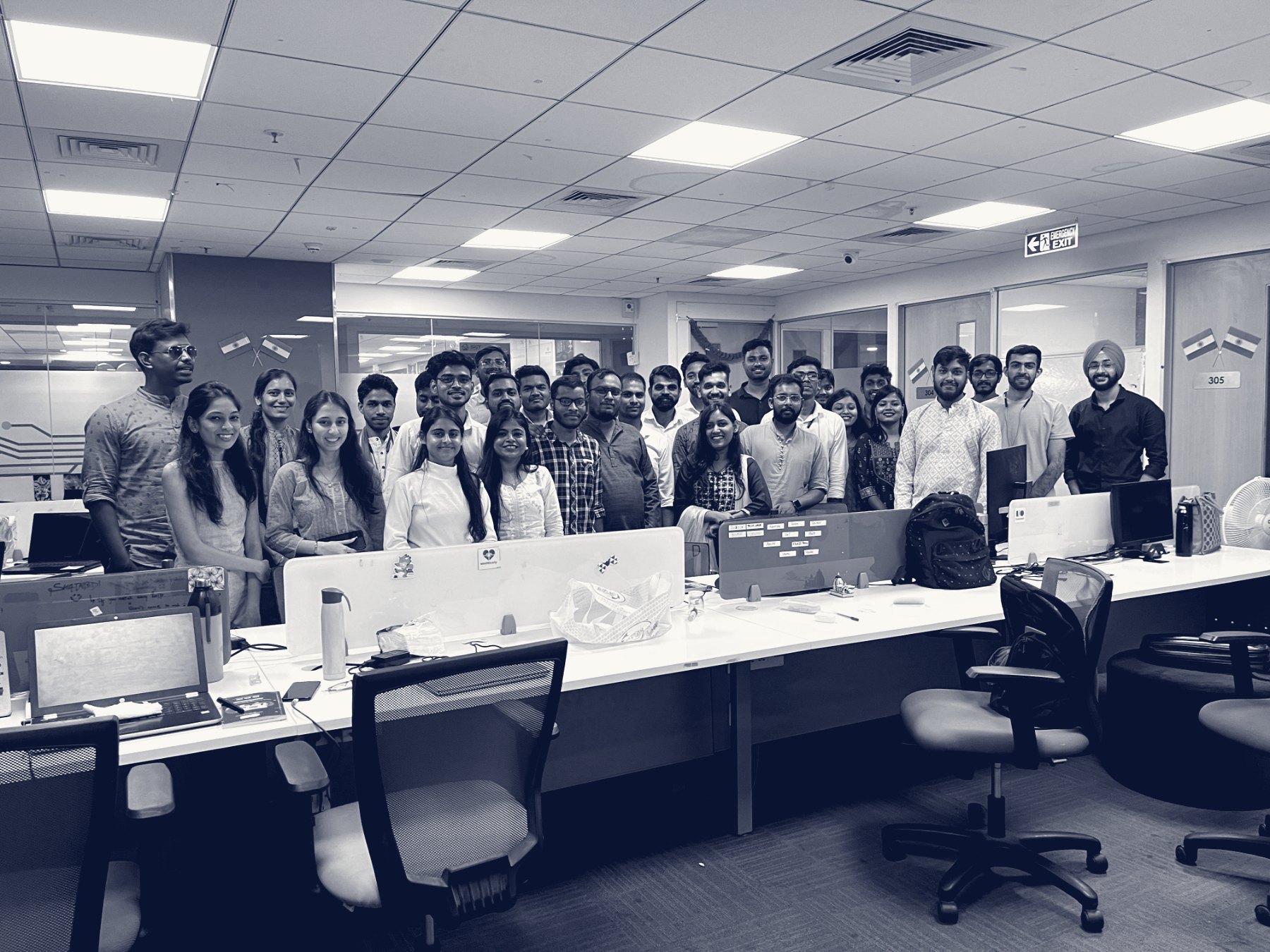
The CodeNicely team

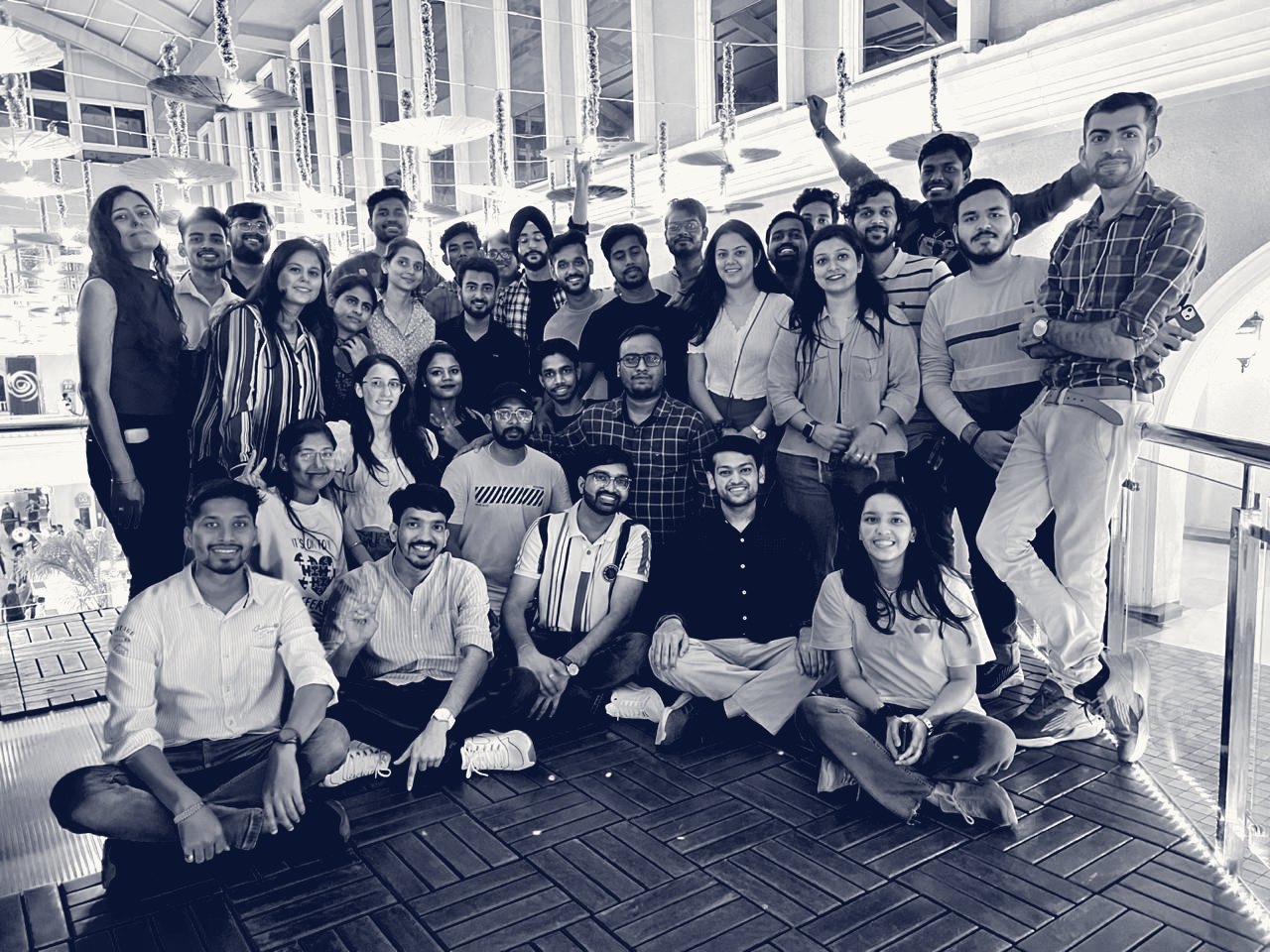
Everything here was built by people who chose to be here.

The team · Raipur

Why Raipur.

Because we chose it. Not because we were stuck with it.

We could have moved. Everybody said we should. The money is in Bangalore. The clients are in Delhi. Every year somebody asks when we're relocating.

We stayed.

We stayed because you can build a company of real, global quality from here — and we'd rather prove that than argue about it. We stayed because people here shouldn't have to leave home to have a serious career. And because good work speaks for itself, whatever the pin code.


That is not a limitation we overcame. It is the point.

Three
The office floor
Second floor, Shankar Nagar. One office. Every client, from here.
4
One office.
Four continents.
A second floor in Shankar Nagar, Raipur — building for clients in the United States, Dubai, Singapore and across Europe.

Why we exist.

In most fields — technology included — the West leads. They own the products. They set the direction. India, with all its talent, is still seen as the place that provides the service. Not the place that creates the thing.

Think about who wrote the rules of the internet. Who built the operating systems. Who invented email. Who built the models everyone is now building on.

They wrote the playbook. We got very good at following it.


We don't want to stay that way.

Four
This is not patriotism. It's ambition. We think the work can be as good here as anywhere — and the only way to prove that is to do it.

CodeNicely exists to change that story — to show that world-class products can be imagined, built and scaled from right here.

Every line of code we write is a small argument for that idea.

We underestimate ourselves. Most of the time. Fix that, and there is no limit to what we can do.
Four — continued
Every line. Including the boring ones. Especially the boring ones.

What we're aiming at.

The north star
Help 1,000 teams build ₹1,000 crore companies by 2030. The far horizon — the thing that makes the hard days make sense.
The day job
Modernise real businesses. Take companies that already have customers, revenue and a team, and make their systems as strong as their ambition. Software they fully own. AI where it actually moves the numbers. Shipped in weeks, not quarters.

These are not two different missions. The businesses we modernise today are the companies that get big tomorrow.

We are not waiting for the 1,000. We are working on them, one at a time, right now.

Five
It starts with the thing on your screen this morning.

Built entirely on word of mouth.

If you remember one thing from this book, make it this one.

In 2024 we got more than 200 leads. We spent nothing on marketing. We have never run an ad. We have never made a cold call. Nobody here is knocking on doors.

Every client we have came to us because somebody told them about us.

Think about what that means. The work is the marketing. The boring Tuesday where you fixed something properly instead of patching it — that is what pays the salaries here.

It works the other way too. One badly handled project. One broken promise. One client left in the dark. And the machine that feeds this company stops turning.

Six
Every one of us is in sales. Whether we know it or not. Nobody here has "business development" in their title, and everybody does it.
0
200 leads
₹0 marketing
We are not built on a funnel.
We are built on our reputation.
Please guard it
The office floor in Raipur

One floor, in Shankar Nagar. This is where all of it happens.

02

What
we believe

Six values. Each one comes with what it means, what it looks like on an ordinary Tuesday, and — just as important — what it does not mean.

The six.

1
Own the outcome
Not the task. And we do what we say we'll do.
2
CodeNicely
Craft. Fast, but never sloppy.
3
Be open
Say it simply. Say it early. Nothing hidden.
4
Be kind — and fun to be with
Team over ego. Always.
5
Their business is our business
We think like owners, not vendors.
6
Stay curious
Learn fast. Teach the next person.
Seven
Short enough to remember. That's the whole test. A value you can't recite is a value you don't have.
01
Value one of six

Own the
outcome.

Not the task. The outcome.
What it means

"I did my part" is the one thing we never want to hear. Your part is not the point. The thing working is the point.

If you notice something broken, it is now yours. Not because anyone assigned it to you — because you saw it first.

And if you say you'll do it, do it. If it's going to be late, say so before it's late.

Own the outcome
The person who says a project is drifting is doing their job. The person who stays quiet because it isn't their module is not.
On a Tuesday
  • You find a bug in someone else's code. You fix it, or you make sure the right person knows. You don't walk past it.
  • On Tuesday you realise Friday is at risk. You say so on Tuesday.
  • The client asks something that isn't strictly yours. You find them the answer instead of forwarding the email.
  • Something you shipped breaks. You're the first one looking at it, not the last.
  • You give the estimate you actually believe — not the one that will make people happy.
Own the outcome
Nobody here is punished for an honest miss that was flagged early. That is a promise, and it runs in both directions.

What this does not mean

It does not mean nights and weekends. Ownership is about being clear and honest, not about hours. Someone quietly burning out is not owning anything — they're hiding a problem.

It does not mean doing it alone. Asking for help early is ownership. Struggling in silence for three days is not.

It does not mean never missing. You will miss things. Own it, say it, fix it.

Own the outcome
Every value in this book has one of these. A value with no limits is just a stick to beat people with.
02
Value two of six

CodeNicely.

It's the name of the company. It was always meant as an instruction.
What it means

We care how a thing is built, not just that it works. Anyone can make something run. We want to make things a stranger could pick up in a year and understand.

Build it fast — slow costs our clients money. But fast has never meant sloppy here. Not once.

The trick is not to cut corners. The trick is to know the good path.

CodeNicely
"CodeNicely for CodeNicely." The line was in our very first engineering job description, back in 2021. It's still the standard.
On a Tuesday
  • You name the variable properly, even though nobody will ever check.
  • You write the API doc as you go — not three weeks later, when you've forgotten.
  • You refuse to merge something you know is fragile, even under pressure.
  • You leave the file a little better than you found it.
  • You don't ship at 6:50pm on Friday just to say you shipped.
CodeNicely
Build it as art. Build something you would be proud to put your name on — of a standard that would hold up anywhere in the world.

What this does not mean

It does not mean polishing forever. Perfect is a way of not shipping. An MVP is allowed to be an MVP — it just has to be an honest one, with the shortcuts written down.

It does not mean slow. Craft is not an excuse for missing a date. If quality and the deadline really do clash, that's a conversation to have out loud — not a decision to make quietly.

It does not mean rewriting things you don't like. Working code that someone else wrote is not an insult.

CodeNicely
See also
The engineering standard, page 54 — what "done" actually means here.
03
Value three of six

Be open.

Say it simply. Say it early. Nothing hidden.
What it means

Simply. If someone can't understand you, that's your failure, not theirs. Nobody is impressed by jargon.

Early. Bad news travels fast here, and nobody is punished for carrying it.

Openly. No secret projects. No hidden agendas. You can ask why a decision was made, and you'll get a real answer.


And when we decide something, the best idea wins. Not the loudest one, and not the most senior one.

Be open
From the 2021 Culture Code "There are no secret projects, hidden agendas, or partnerships."
The four most useful sentences here

“I'm behind.”
“I broke it.”
“I don't understand.”
“I don't think this will work.”


Say any of these and you will be helped. Say none of them, and a small problem quietly becomes a big one.

Be open
On a Tuesday You post the blocker in your daily update instead of hoping it goes away.
A junior has a better idea than yours. You take it — and you say whose it was.
You ask "why are we doing it this way?" — and it's treated as a fair question.

What this does not mean

Open is not unkind. "I'm just being honest" is not a licence to be cruel. Say the hard thing — but say it to help, and say it in private first.

Open inside is not open outside. Client work is confidential. Always.

Openness is not endless debate. We argue, we decide, then we all row the same way — including those who lost the argument.

Be open
The mistake is almost always survivable. The silence usually isn't.
04
Value four of six

Be kind —
and fun
to be with.

How we treat each other matters as much as what we produce.
What it means

No shouting. No humiliation. No politics. Being talented has never been an excuse for being unpleasant, and it never will be.

We get far more done when nobody is counting who gets the credit.

If someone makes a mistake, we don't make them feel small about it. We use it to make the person better, and the process better.

Be kind
Genuinely — enjoy this. We spend most of our waking hours in this building. If it stops being fun, that isn't a small problem. Say so.
On a Tuesday
  • Someone's stuck. You give them twenty minutes, even though you're busy. Especially then.
  • You never criticise a teammate in public. Praise in public. Correct in private.
  • The intern's question gets the same respect as the lead's.
  • When something goes well, you say who did it.
  • You go to the celebration. It matters more than you think.
Be kind
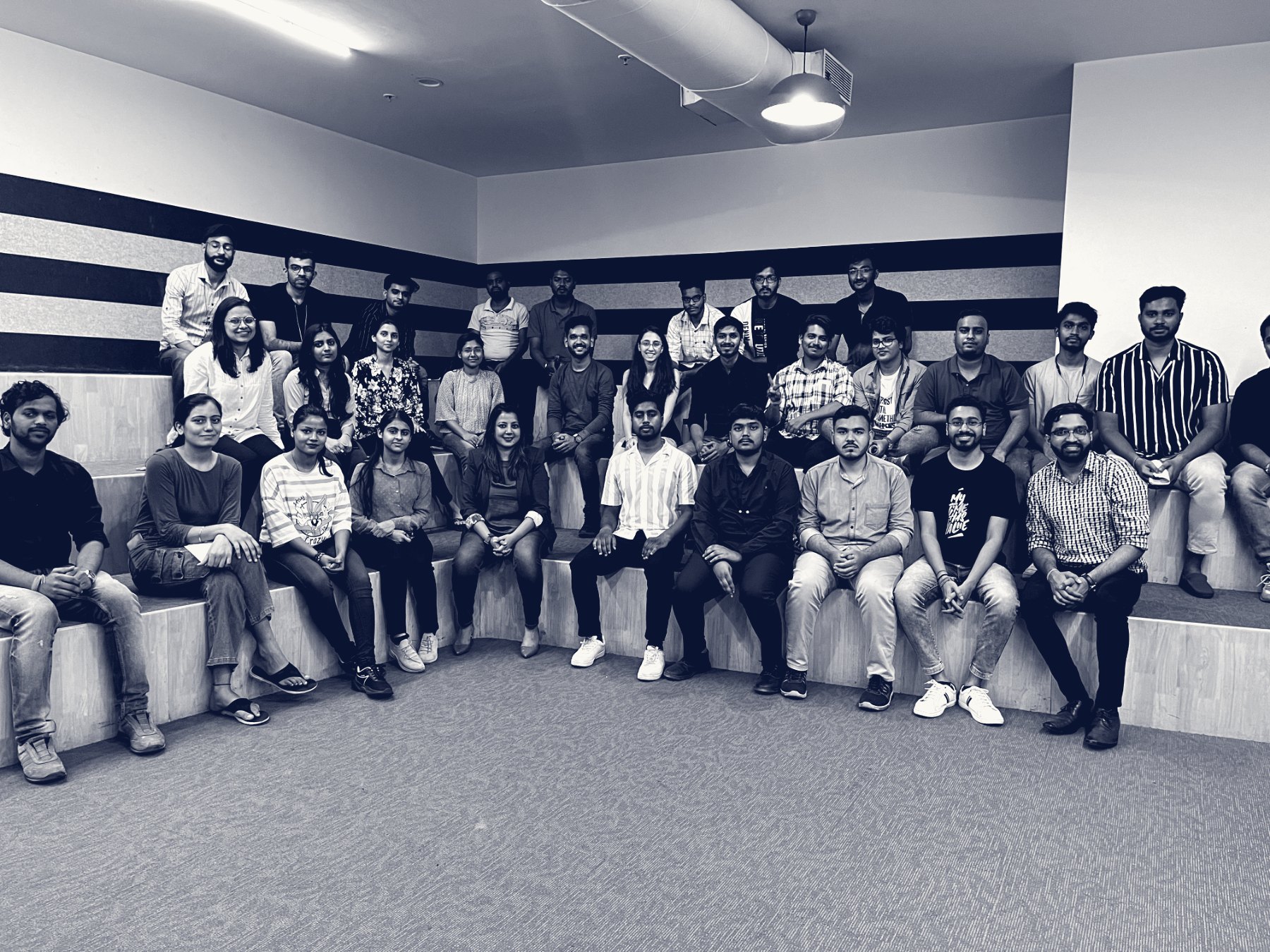
The team together
Most of our waking hours, in one room.

What this does not mean

Kind is not soft. The kindest thing we can do is tell someone early and honestly that something isn't working — while there's still time to fix it. Letting a person fail quietly is not kindness.

Team over ego does not mean no credit. We say people's names. Loudly. We just don't compete for the microphone.

Fun is not a substitute for good work. Nobody here is graded on being cheerful.

Be kind
The people with the least power here are the ones we protect the most. See the red lines, page 61.
05
Value five of six

Their business
is our business.

We are not a vendor. We are the technical team they don't have.
What it means

Behind every project is a person who has staked something real. Their savings. Their reputation. Sometimes their family's future.

They are not a ticket queue. They are a founder — and the whole thing rests on them.

So we think like owners of their company, not suppliers to it. And we spend their money the way we spend our own. Carefully.

Their business is our business
We know what a rupee costs because we earned every one of ours. Bootstrapped since that first ₹8,000.
On a Tuesday
  • You tell the client the feature they asked for isn't worth building — and you say what is.
  • You pick the boring, cheap infrastructure over the exciting, expensive one.
  • You learn enough about their industry to have an opinion about it.
  • You care whether the thing you shipped actually got used.
  • You treat the company's money — tools, licences, servers — like it came out of your own pocket.
Their business is our business
One client called us part of their founding team, rather than a vendor. That wasn't a compliment we were given. It was one we earned.

What this does not mean

It does not mean the client is always right. Owners disagree. If we think they're making a mistake, we owe them the argument — once, clearly. Then we respect their call.

It does not mean saying yes to everything. Scope that grows quietly hurts them as much as it hurts us.

Frugal is not cheap. We never cut a corner the client pays for later.

Their business is our business
See also
What we say no to, page 64.
06
Value six of six

Stay
curious.

The tools change every six months. Learning is the only skill that lasts.
What it means

What you know today has a shelf life. What you can teach yourself does not.

We have always hired for that — and we have always grown people up, rather than waiting for them to arrive finished.

The part people forget: teach the next person. You should leave CodeNicely more capable than you arrived. So should everyone around you.

Stay curious
Right now, the thing to be curious about is AI. We're not nervous about it and we're not precious about it. We use it hard. See page 58.
On a Tuesday
  • You try the new tool before you have an opinion about it.
  • You read the code you're about to change, instead of guessing.
  • When you learn something useful, you tell somebody. Ideally everybody.
  • You sit with a junior for half an hour instead of just fixing it for them.
  • You can explain why the AI's suggestion was right — not just that it compiled.
Stay curious
Going deep beats going wide. One problem understood properly is worth more than a shallow tour of ten frameworks.

What this does not mean

It does not mean chasing every new thing. Curiosity is about depth as much as novelty.

It does not mean the AI does the thinking. The tool is fast. The judgement is still yours.

It does not mean learning only in your own time. If you need a day to understand something properly, that day is part of the work.

Stay curious
You should leave here worth far more than when you walked in. Whenever you leave.

Where these
came from.

From 2021 onward, every deck we made carried the same five words. Every one of them survives in the six.

Take Ownership
is now Own the outcome
Customer Satisfaction
is now Their business is our business
Share & Respect Ideas
is now part of Be open
Constant Improvement
is now Stay curious
Integrity
runs through Own the outcome and Be open
Fourteen
What's new CodeNicely, openness, kindness and fun — all of which were in the 2021 Culture Code — and frugality, which is what being bootstrapped teaches you.
The mistake is almost always survivable.
The silence usually isn't.
03

How
we work

The rhythm of the week. How we treat the people who hire us. And the standard we hold the work to.


The rhythm.

Every morning
A short standup with your team and your lead. What's moving. What's stuck. What's next.
Every day, in writing
What did I do yesterday? What am I doing today? What's blocking me? Three lines. Two minutes. Saves hours.
Every Monday
Your week's plan, with real dates on it, where your team can see it.
Every week, with the client
A demo of something working. Not a status update — a demo.
Every quarter
The whole company in one room. Numbers, wins, what's coming, and anything you want to ask.
Every December
The appraisal. Nothing in it should ever be a surprise.
Fifteen
None of this is bureaucracy. It exists so that nobody is ever surprised. That is the only reason any of it exists.

We run on our own software.

We used to run this company on tools other people built. Now we run it on PerformNicely, which we built. We hire through RecruitNicely, which we also built.

This is not a marketing decision. It's a discipline.

When you use your own product every day, you can't lie to yourself about it. Every rough edge is an edge you feel. Every slow screen is a screen you wait for.

If it isn't good enough for us, it isn't good enough for them.
Sixteen
Be your own most annoyed customer. There is no faster way to learn what "good" feels like.

The people who hire us.

Everyone in this industry talks about the user's experience. We think somebody else deserves the same care: the founder. The person who started it. Who carries the whole thing. Who usually has nobody to tell when they're frightened.

We call it Fx — Founder Experience. Four habits.

Outcome first
Tell them what moved, in numbers. Not what you were busy with.
Radical clarity
Make every trade-off simple enough that they can decide quickly. No jargon. Ever.
Bad news early
The moment you know, they know.
Build with them
They are not a client on the far side of a wall. They are on the team.
Seventeen
Fx Everyone optimises UX. Almost nobody thinks about what the founder's experience of the build actually feels like.

No surprises.

The rule underneath all of it. It does not bend.

A client can forgive a delay. A bug. A wrong estimate. Even a bad week. What they cannot forgive — and should not — is finding out late.

  • The moment you know, they know. Not after three days of quietly trying to fix it.
  • Never let a demo be the first time they hear about a problem.
  • Never promise a date you don't believe. An honest "three weeks" beats a hopeful "one week" every time.
  • Never go quiet. To a founder, silence sounds exactly like something going wrong.
Seventeen — continued
Silence is the loudest thing a client ever hears from us. Make sure it never has to say anything.
The team at work

Build it as art. Build something you would be proud to sign.

CodeNicely · Value 02

The craft.

Our engineering standard. Not a style guide — a shared idea of what "good" means here.

Done is not "it works on my machine." Done is not "I pushed it." It's done when all six of these are true:

  • It does what was actually asked for — and you checked, rather than assumed.
  • Someone else has read the code and approved it.
  • You tested it. On purpose. Including the ugly cases.
  • It's documented.
  • It's deployed where the people who need it can see it.
  • You'd be comfortable if a stranger read this code with your name on it.
Eighteen
Miss any one of the six and it isn't done. It's just written.

Code review.

Nothing reaches a client's system without a second pair of eyes. Not because we don't trust you — but because nobody catches their own blind spots.

  • Review the code, not the person. "This breaks when the list is empty" — not "you always forget this."
  • Small changes, reviewed fast. A review sitting for two days is a review blocking a person.
  • If you don't understand it, that's a finding. Code only its author can read is a liability, however clever.
  • Approving means you'll stand behind it. A rubber stamp is worse than no review.
Eighteen — continued
Nobody, anywhere, catches their own blind spots. That is what the second pair of eyes is for — not suspicion.

The four documents
we owe every project.

Write them as you build. Never at the end — by then you've forgotten why.

The workflow
What this system does, in plain language, for a human.
The database
What the tables are, and how they relate.
The API
Every endpoint. What it takes. What it returns.
The codebase
How to run it, how to deploy it, and where the bodies are buried.
CodeNicely for CodeNicely.Our first engineering job description, 2021
Eighteen — continued
Write for the person who maintains it. Half the time, that person is you in eight months — and you will have forgotten everything.

Testing, and
handover.

Test the thing you built before you say it's finished. Then test the case you're hoping nobody tries. The empty list. The enormous file. The double-click. The network dropping halfway.


The real test of our craft isn't whether we can build it. It's whether someone else can pick it up.

Eighteen — continued
Every bug a client finds costs us more than it costs them — in trust, which is the only currency we actually have.

Building with AI.

Four rules. Not complicated. Not negotiable.

1  Use it. Hard.

Not using AI to go faster is falling behind. Every engineer here works with these tools daily, and we expect you to be fluent. This isn't an experiment any more. It's how we work.

2  You own every line it writes.

The AI can write it. You are accountable for it. If you can't explain what it does and why it's right, you can't ship it. "The AI wrote it" is not a defence.

3  Never paste client code into public tools.

Approved tools and accounts only. A client's code in a free chatbot is a data leak.

4  Be honest about it.

We build with AI and we say so. We never dress AI work up as handmade, and never dress slow work up as AI-fast.

Eighteen — continued
"The AI wrote it" has never been a defence, and it never will be.
Done is not
“it works on
my machine.”
The craft · page 54
04

What
we expect

Almost everything in this book is a matter of judgement. This part is not.


The red lines.

Mistakes are forgivable here. Almost all of them. These are the ones that aren't.

Lying

To a client or to a teammate. Faking progress. Hiding a mistake. Saying something is done when it isn't. The mistake is survivable. The cover-up is not.

Stealing — money, code, or credit

Company money or client money. Shipping copied code as our own. Taking credit for a teammate's work.

Conflict of interest

Taking money from a client on the side. Working secretly for a competitor. Declaring a conflict is always fine. Hiding one never is.

Faking credentials

Misrepresenting who you are, or what you know. To us, or to a client.

Nineteen
The mistake is survivable. The cover-up is not. That sentence is the whole chapter.

And these
are absolute.

Harassment of any kind

Sexual harassment. Bullying. Intimidation. There is no version of this that is a misunderstanding, and no seniority that excuses it.

Discrimination

On gender, caste, religion, region, language, disability, age or background. We hire, pay and promote on the work. Nothing else. Ever.

Abusing a junior or an intern

Humiliation. Shouting. Dumping your work on them. Using seniority as a weapon.

Leaking client data or code

Client code or business information leaving approved systems — a personal laptop, a public repo, a WhatsApp group, an unapproved AI tool.

Nineteen — continued
If any of this happens to you — or you see it happen to someone else — take it straight to Meghal or Ujjwal. It will be taken seriously, and it will be handled.

What belongs to the client.

People trust us with the inside of their business. Their numbers. Their strategy. Their half-finished ideas. Their worries. That trust is the reason we have work at all.

Assume it's confidential
Unless it's publicly launched and we have permission, treat every name, screen, number and conversation as secret. Default to silence.
Never post client work
Not in a portfolio. Not on LinkedIn, Dribbble or GitHub. Not without written permission.
Never discuss one client with another
Not even to impress them. Especially not to impress them.
Twenty
The moment a client hears you gossip about someone else's business, they know exactly what you'll say about theirs.

What we say no to.

We are selective, and we have turned down real money. This is what we turn it down for.

  • Work we don't believe in. If we honestly think a build will fail or waste someone's money, we say so. If they want it anyway, we walk.
  • Work that's ethically wrong. Anything that misleads or harms the people who end up using it.
  • Clients who mistreat our team. Rude, abusive, demeaning to our people — the money is never worth it.
  • Work we're not the right team for. Sometimes the honest answer is "we're not the best people for this" — and then we point them to someone who is.

Any one of us can raise any of these. If a project feels wrong to you, say so. You will not be told to be commercial about it.

Twenty-one
Taking money for something we expect to fail is a kind of lying. See the red lines, page 61.

And when we get
it wrong, we pay
for it.

We have gone well over on a project before. Weeks over. The estimate was ours to get right, and we got it wrong.

We did not send that bill to the client.

We absorbed it. We finished the work. We learned to scope better. That decision cost real money — money that would have paid salaries.

Our mistake is our cost. That's not generosity. That's just what the word "partner" means.
Twenty-one — continued
We're not telling you this because it was heroic. We're telling you because it's the standard — and you should know that before you're ever in the room where the decision gets made.
05

Growing
here

Who we look for. How you get further. And what your first week is going to feel like.


Who we hire.

This is the bar you were held to. It's now the bar you hold others to.

Attitude over credentials
We've hired from everywhere and grown people up. What you can learn matters more than where you studied.
Learning speed
The tools change constantly. We hire people who teach themselves — and who are fluent with AI.
Ownership instinct
People who finish things. Who see a problem and fix it before anyone asks.
Clear communicators
People who can explain their work simply — to a teammate, and to a client who isn't technical.
Twenty-two
Everyone meets a founder before they're hired. Not to check their code — to check that they'll fit here, and that here will fit them.

How you grow.

No secret. No politics. Four things earn you more responsibility, more trust, and more money.

  • You deliver what you committed. Consistently. On time. At quality. Reliability compounds faster than brilliance.
  • You make other people better. Mentoring juniors. Unblocking teammates. This is what turns a good engineer into a lead.
  • You earn client trust. The client asks for you by name. There is no stronger signal in this company — and no faking it.
  • You take on more before anyone gives it to you. Nobody is handed leadership here. You grow into it by behaving like a leader while you're still not one.
Twenty-three
You are spending the most valuable years of your career with us. We know it. Our job is to make sure that whenever you leave, you leave worth far more than when you walked in.

Your first week.

You'll get a buddy
One person whose actual job is to make sure you're okay. There is no such thing as a stupid question to ask them, and no limit on how many.
You'll get your kit
A diary, a CodeNicely bottle, and everything you need to actually do the job on day one.
A standup on day one
You won't understand most of it. That's completely normal. Let it wash over you for a week.
You'll meet a founder
You already did, in your interview. You'll keep meeting them. You can walk up to the CEO and disagree with him.
Twenty-four
One ask, for your first month: tell us what looks broken. You will never again see this place with fresh eyes.
Celebrating together

We celebrate together. It is not a distraction from the work.

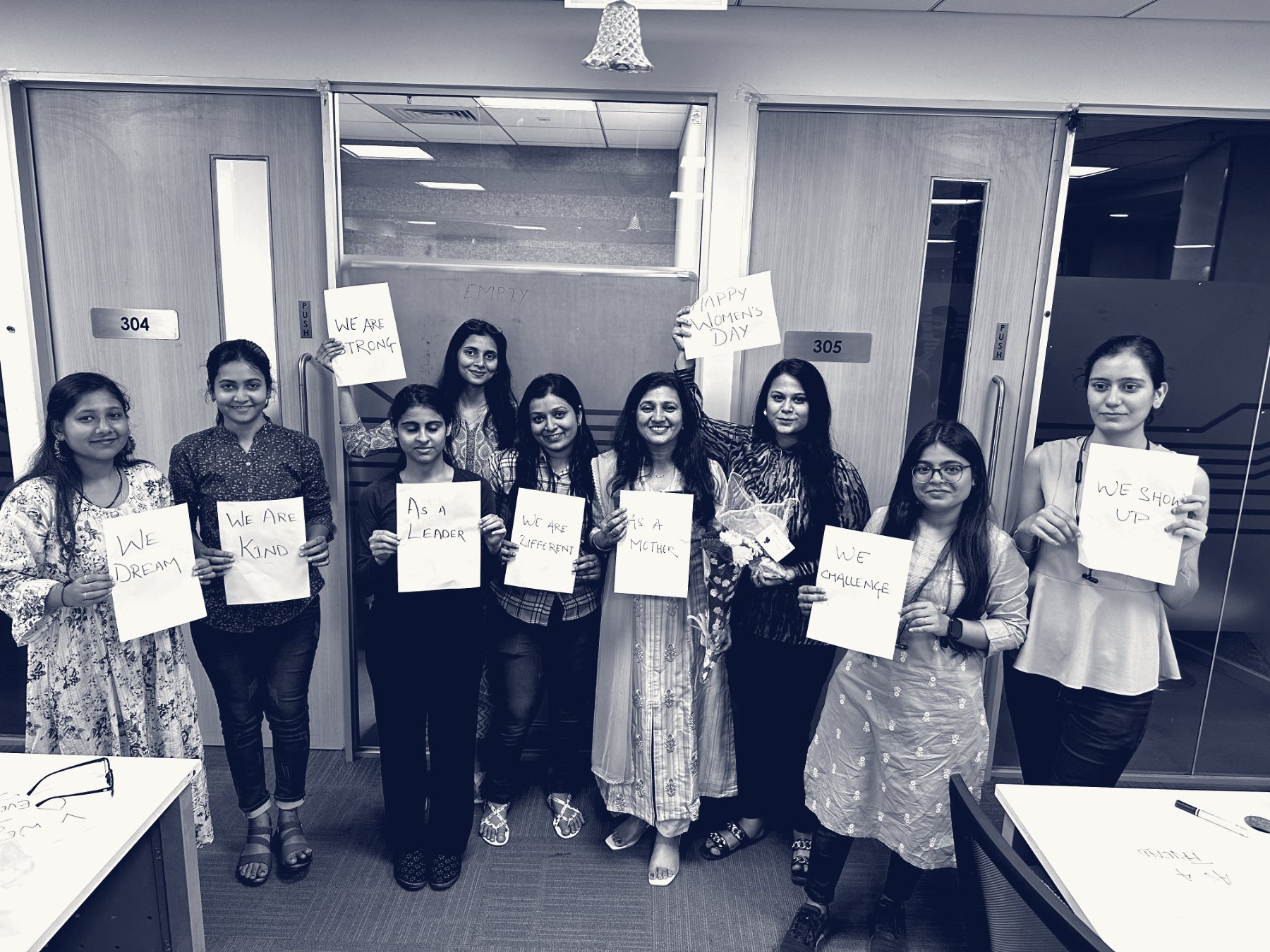
Women's Day · 8th March

How we celebrate.

We celebrate festivals as a team, to celebrate difference. These are the days we actually keep.

Women's Day
8th March. One of the days this office is at its best.
Holi
Together, and messily.
Independence Day
15th August.
Our birthday
31st August. The company was formed in 2017.
Diwali
The big one.
Men's Day
19th November.
Secret Santa
December. Take it seriously.
Sports Day
Where the org chart stops mattering for a while.
Twenty-five
Every birthday gets a cake. Every farewell gets a proper goodbye — we gather, we cut a cake, and we send them off well. Because they were ours, and they always will be.
1
The journey
is 1%
complete.
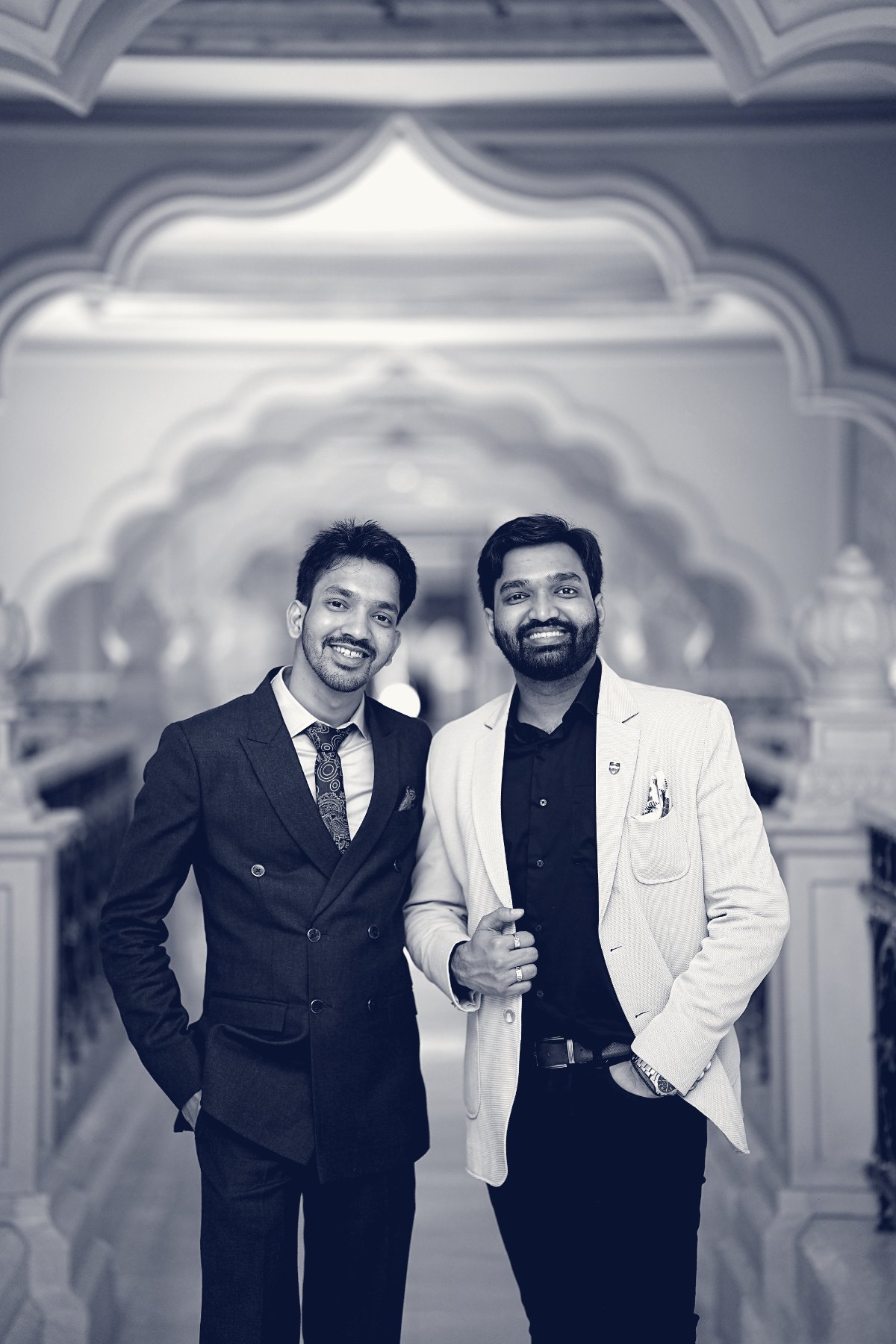
Meghal and Ujjwal

A letter
to you.

We never planned any of this.

We were two friends who wanted to learn how to build things, and somebody phoned and offered to pay us.

We started with ₹8,000 from an internship. We hired eight interns before we had a company to put them in. Every client we have came to us because someone else spoke well of us.

The most valuable thing anyone has is their time — and you are spending yours here. The early years. The ones you don't get back.

None of that was a strategy. It was the only way we knew: do the work properly, tell the truth, and be someone people want to work with again.

That is still the entire plan.


We are grateful for it, and we don't take it lightly. Our job is to make sure you leave here worth far more than when you walked in.

Our ambition isn't modest. We think world-class products can be built from Raipur — and we mean to prove it by shipping things too good to dismiss.

We'll get there the way we got here. By owning the outcome. By coding nicely. By saying the true thing early. By being decent to each other.

Tell us where we're wrong. We mean that. And thank you for making CodeNicely what it is.

Meghal Agrawal
Founder & CEO
Ujjwal Agrawal
Co-founder & CTO
Twenty-six
Ujjwal Agrawal
Ujjwal Agrawal, Co-founder & CTO.
Don't feel proud for achievements older than a week.
How We Build  ·  Raipur  ·  2026